Ailment

Acute cough

A new or short-lived cough, commonly occurring with a cold or other upper-respiratory infection.

This is guidance, not advice. Different guidelines apply to special groups, such as pregnant women and children. If that is you, or you are unsure, seek the care of a health professional.

Start with
Self-care is appropriate only for a mild, uncomplicated short-term cough.
How long
Most acute coughs improve within 3–4 weeks; seek earlier evaluation for severe, worsening, or concerning symptoms.
Reviewed approaches
6 approaches
When to seek help
Know the warning signs

The essentials

What to do first

Self-care is appropriate only for a mild, uncomplicated short-term cough.

Productive/chesty cough, dry/irritative cough, and cough associated with a common cold are presented separately because ingredient evidence is not interchangeable.

How long self-care is reasonable

Most acute coughs improve within 3–4 weeks; seek earlier evaluation for severe, worsening, or concerning symptoms.

Know when self-care isn't enough

When to get medical help

Seek medical care

  • Seek urgent medical help for a rapidly worsening or very severe cough, chest pain, difficulty breathing, coughing up blood, painful neck swelling, or if you feel very unwell.

Contact a clinician

  • Arrange medical assessment if your cough lasts more than 3 weeks, you are losing weight without trying, or you have a weakened immune system.

Reviewed in Remedary

Natural approaches people use

Read our finding for each approach, how people use it, and what to consider before trying it.

Honey

Remedary finding

Short-term symptom relief for an uncomplicated acute cough associated with an upper-respiratory infection.

Clinical researchSome evidence

Honey may modestly reduce cough symptoms in the short term. The evidence is limited, but major self-care guidance recognizes it as a reasonable option for people over 1 year old.

How people use it

Use a small amount on its own or in a warm drink. Honey-containing recipes are practical self-care preparations, not a substitute for evaluation when a cough is severe, persistent, or accompanied by breathing difficulty.

For relief now

Related preparations

A recipe may differ from the form described in the finding above.

View 6 more preparations and recipes
Sources & research (2)
Cough

NHS · Background source · NHS provides practical self-care advice including a hot lemon and honey drink.

Open
Cough (acute): antimicrobial prescribing - Recommendations

NICE · Supporting source · NICE identifies honey as a self-care option with limited evidence of benefit for acute cough in people over 1 year old.
Open

Thyme

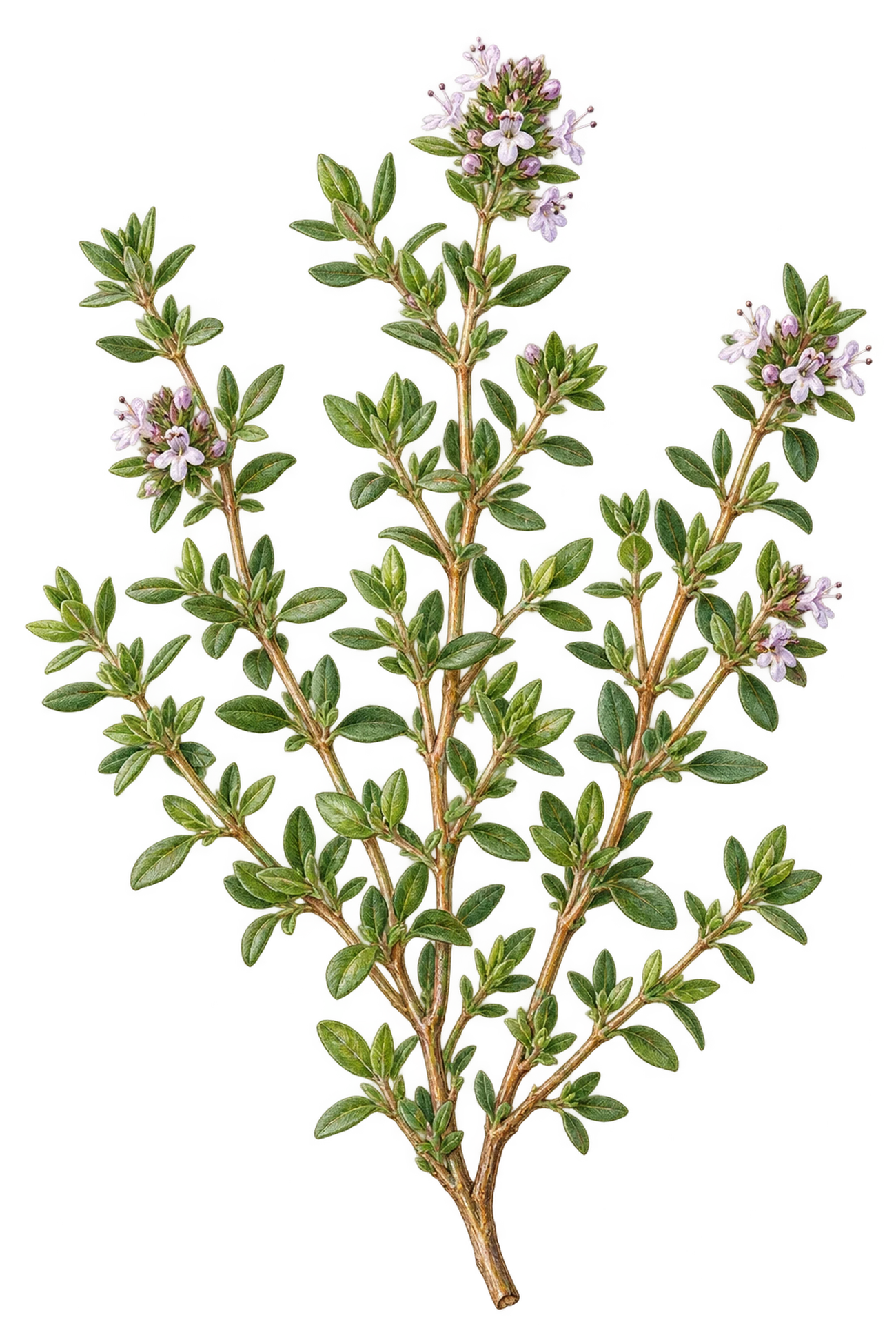
Botanical illustration of thyme sprigs with small green leaves and pale lilac flowers.

Remedary finding

Traditional-use option for productive or chesty cough associated with a cold.

Traditional use

Thyme has a long history of use for productive, chesty coughs associated with colds. Modern clinical evidence is not strong enough to call it a proven treatment, so this is best described as a traditional-use option.

How people use it

A simple thyme infusion is the closest household preparation. Everyday thyme recipes can also appear in the ingredient catalog, but they do not inherit the cough claim.

For relief now

Related preparations

A recipe may differ from the form described in the finding above.

View 6 more preparations and recipes
Sources & research (1)
Thymi herba - herbal medicinal product

European Medicines Agency · Traditional use · EMA recognizes specified thyme preparations for productive cough associated with colds on the basis of traditional use.

Open

Licorice Root

Remedary finding

Traditional expectorant use for cough associated with a cold.

Traditional use

Licorice root has traditional use as an expectorant for cough associated with a cold. This is a traditional-use claim rather than strong modern clinical evidence.

How people use it

Because preparation and dose matter, prefer clearly labeled medicinal products or conservative short-term preparations rather than frequent or prolonged casual use.

For relief now

Sources & research (2)
Licorice Root

National Center for Complementary and Integrative Health · Background source · NCCIH provides safety context for glycyrrhizin-containing licorice and important risk groups.

Open
European Union herbal monograph on Glycyrrhiza glabra L. and/or Glycyrrhiza inflata Bat. and/or Glycyrrhiza uralensis Fisch., radix (revision 1)

European Medicines Agency · Traditional use · EMA traditional-use monograph: liquorice root taken by mouth as an expectorant in cough associated with cold (and separately for dyspepsia); adults; based on long-standing use, not clinical trials.

Open

Marshmallow Root

Remedary finding

Traditional-use option for dry, irritating cough accompanied by throat irritation.

Traditional use

Marshmallow root has traditional use for dry cough and throat irritation. The evidence reviewed by regulators is based mainly on long-standing use rather than strong clinical trials.

How people use it

Use only a preparation that matches established marshmallow-root directions; do not infer a medicinal dose from ordinary food or tea recipes.

For relief now

Sources & research (1)
Althaeae radix - herbal medicinal product

European Medicines Agency · Traditional use · EMA recognizes traditional use of marshmallow root for irritation of the mouth or throat and associated dry cough.

Open

Ivy Leaf

Remedary finding

Preparation-specific expectorant use for productive or chesty cough.

Clinical researchSome evidence

Certain standardized ivy-leaf medicinal preparations are used as expectorants for productive cough. The evidence applies to specific preparations and should not be generalized to homemade ivy products.

How people use it

Use only appropriately labeled standardized medicinal ivy-leaf products. Remedary does not recommend homemade ivy tea or other DIY ingestion.

For relief now

Sources & research (1)
Hederae helicis folium - herbal medicinal product

European Medicines Agency · Supporting source · EMA assessment is preparation-specific and supports specified ivy-leaf medicinal products for productive cough.

Open

Pelargonium

Remedary finding

Short-term symptomatic use for cough in the context of a common cold or acute respiratory infection, using standardized preparations.

Clinical researchSome evidence

Pelargonium may help some cough and common-cold symptoms, but the evidence is limited and applies to specific medicinal preparations rather than homemade products.

How people use it

Use only a standardized product that matches the preparation and age range described in the product information.

For relief now

Sources & research (2)
Cough (acute): antimicrobial prescribing - Recommendations

NICE · Supporting source · NICE notes limited evidence for pelargonium as a self-care option in appropriate age groups.

Open
Pelargonii radix - herbal medicinal product

European Medicines Agency · Traditional use · EMA assessment provides preparation-specific traditional-use context for Pelargonium root.

Open

Your Apothecary

Practical preparations

Explore preparations linked to this ailment. A recipe may differ from the form described in the finding above.

Sign in to see what you can make with your Apothecary.